WORKLOAD MOBILITY
Unifying legacy migration workflows to simplify VM mobility

EFFICIENCY
-30%
SATISFACTION
92%
STRATEGY
Vision
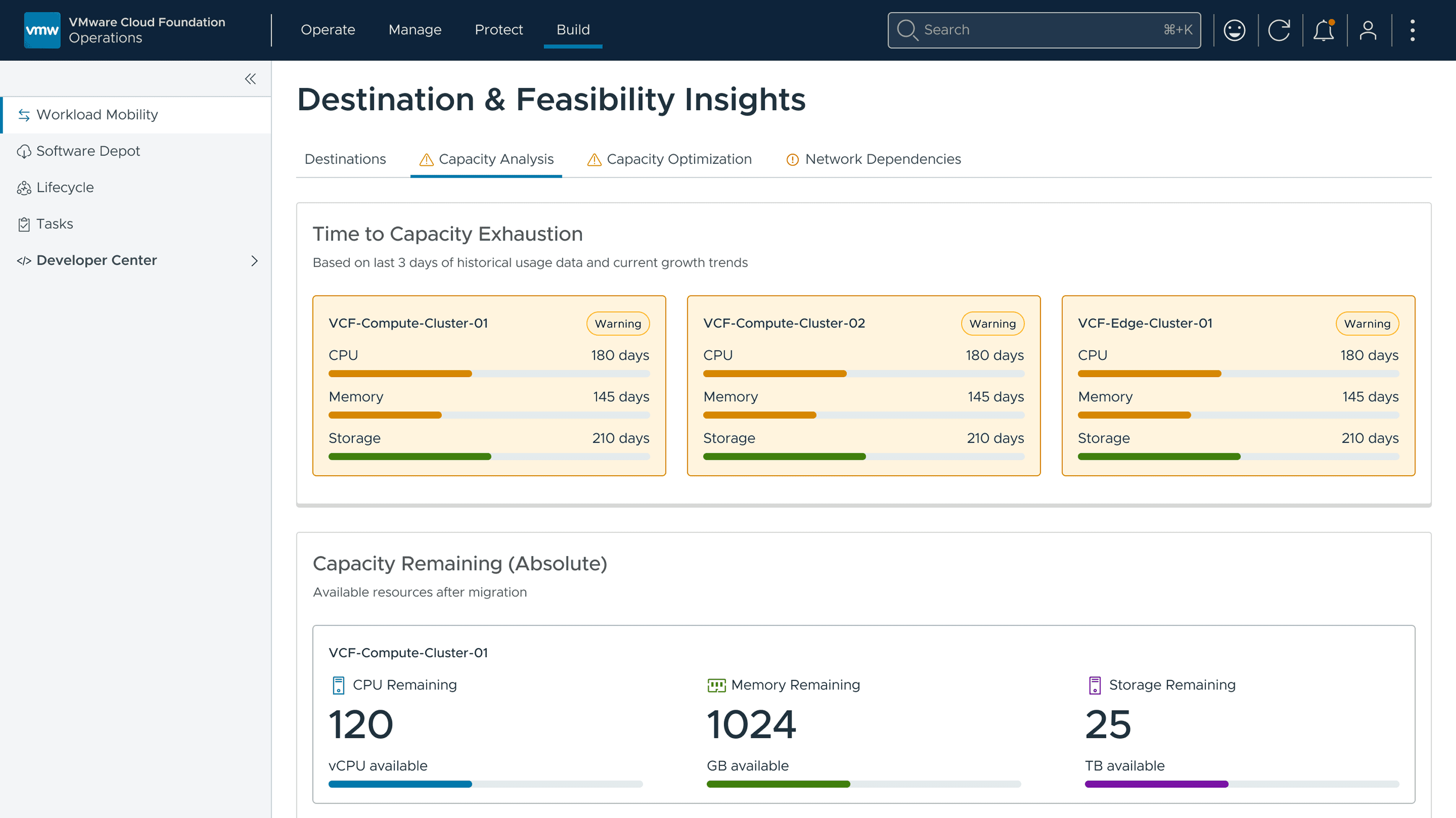
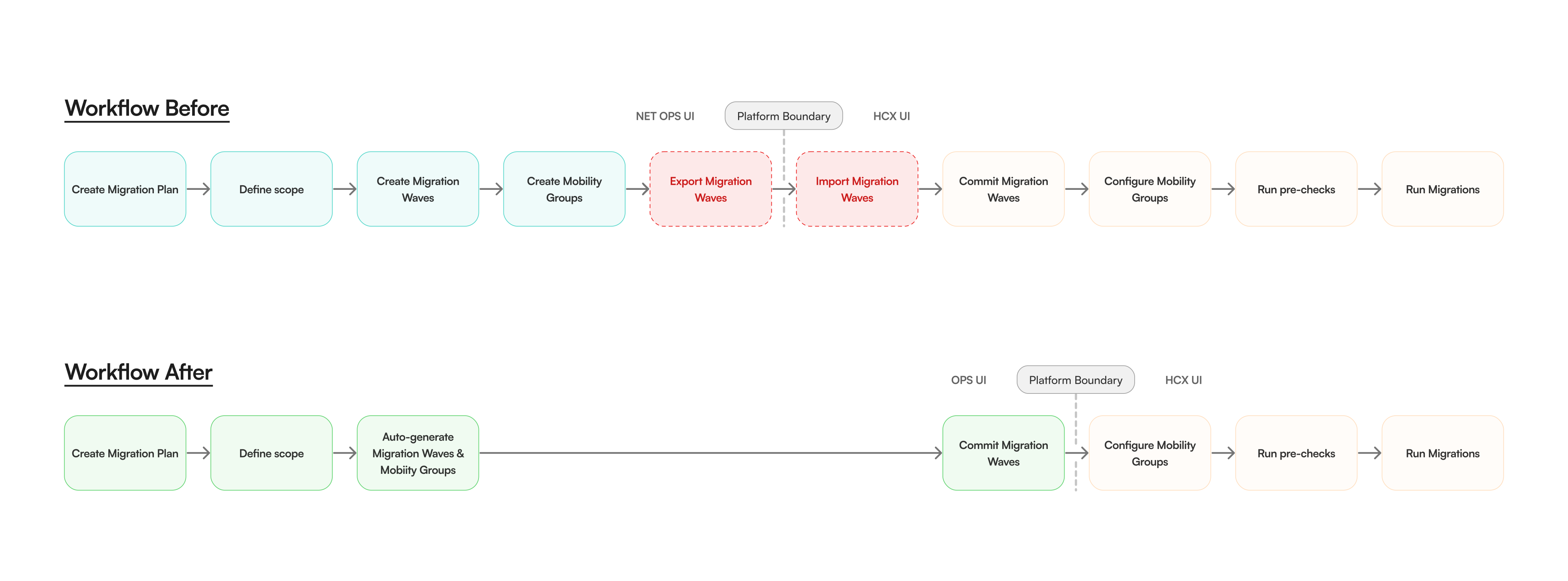
Enterprise VM migration was fractured across multiple legacy tools (Network Operations UI and HCX UI). Users were forced to navigate disjointed workflows, lacking situational awareness of their capacity and overall migration scope.
Partnering with product and engineering, I led the UX strategy to deprecate migration planning in legacy Net Ops UI, integrate it directly into the modern Operations Console, and modernize HCX UI for future platform consolidation.
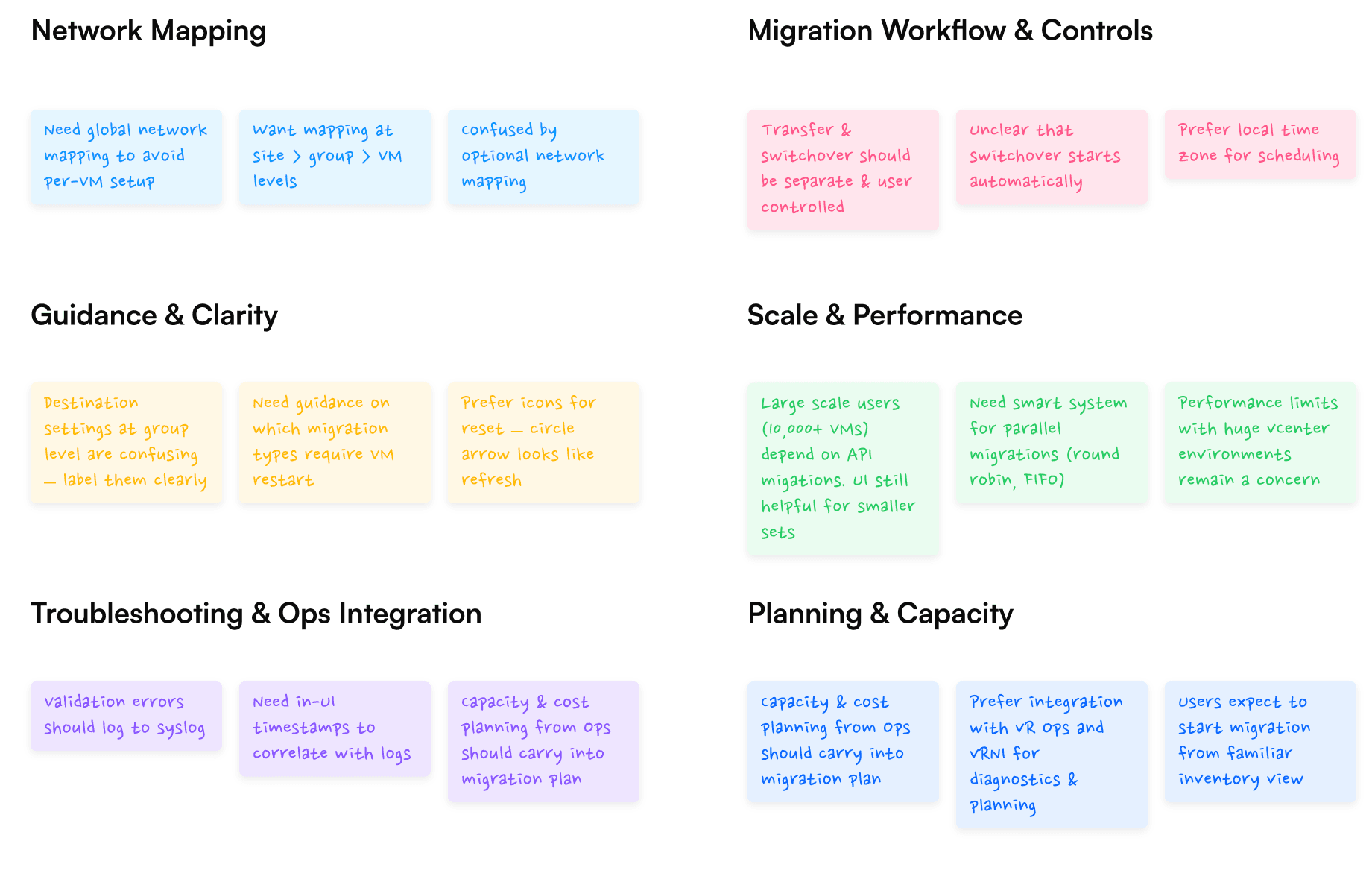
13 Sessions • 10 Customers • 49 Participants
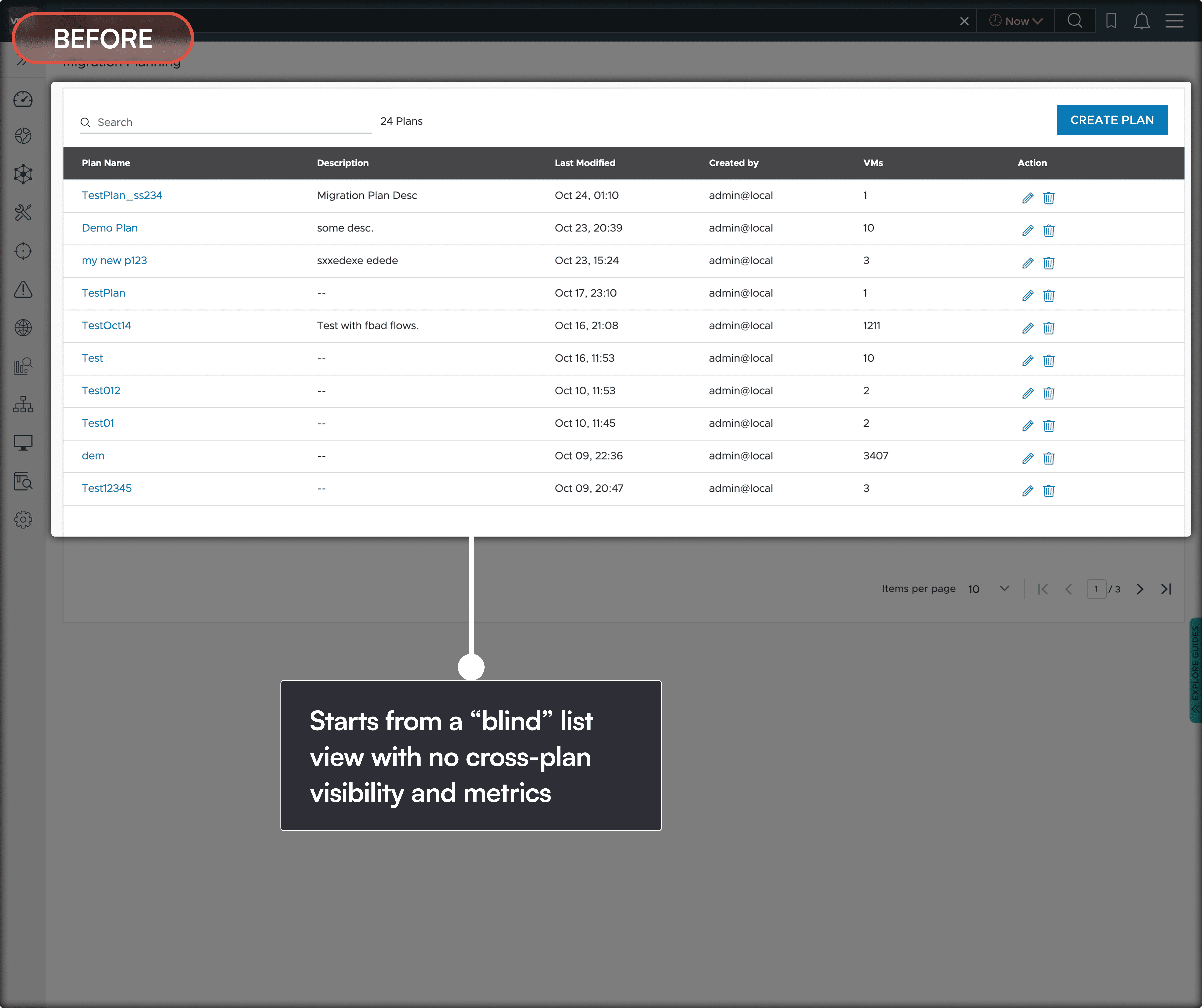
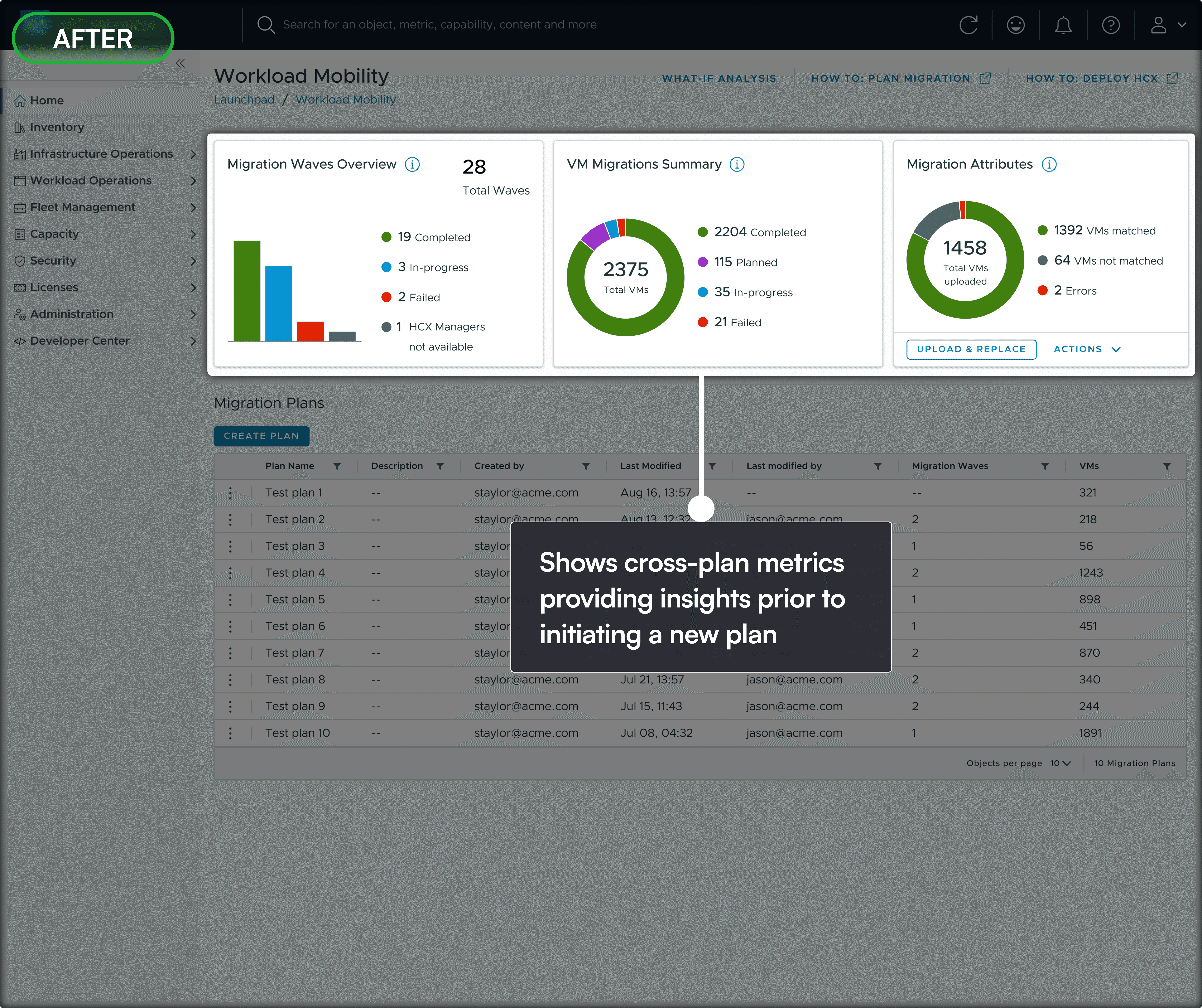
Global visibility at the landing page
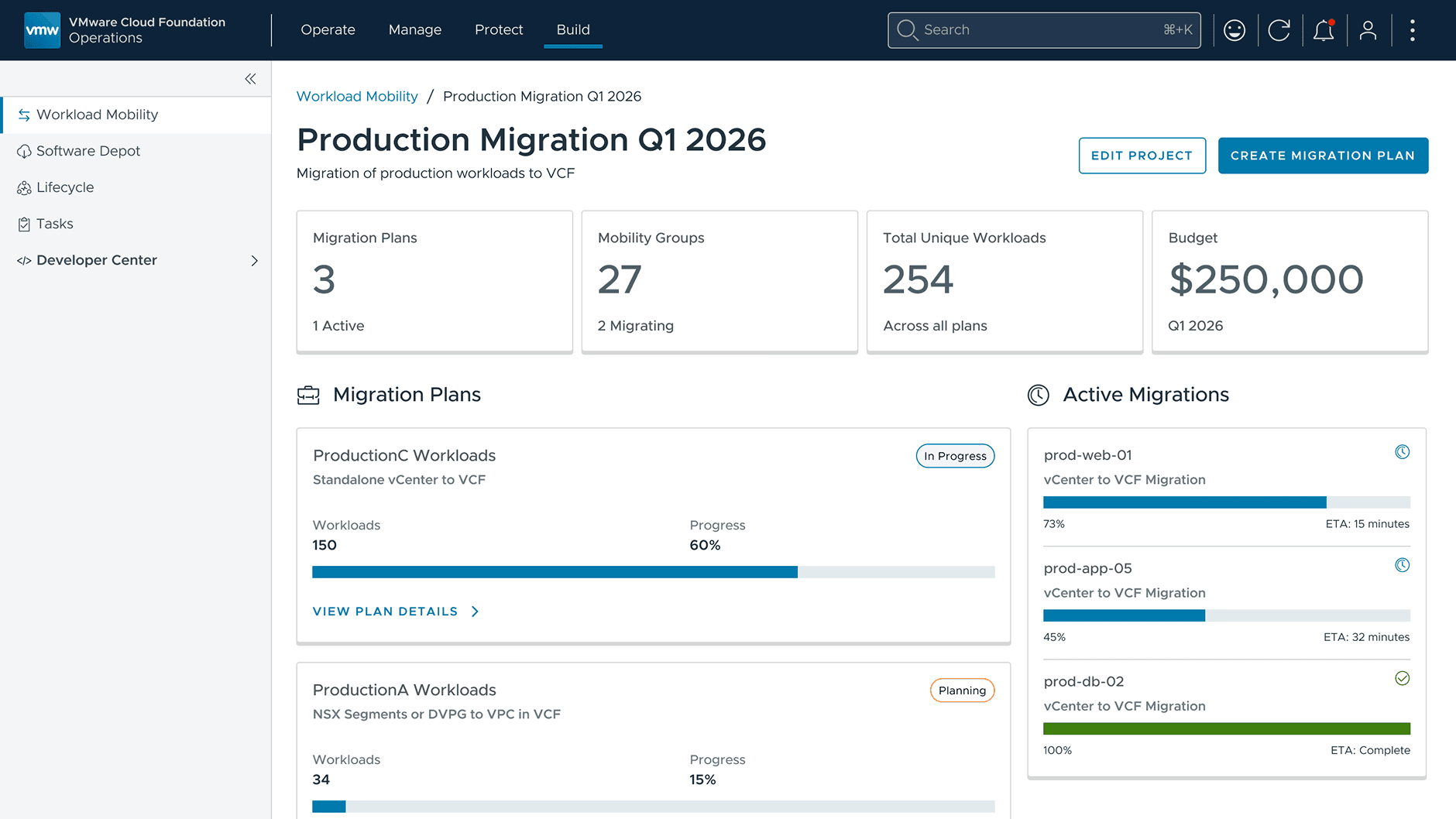
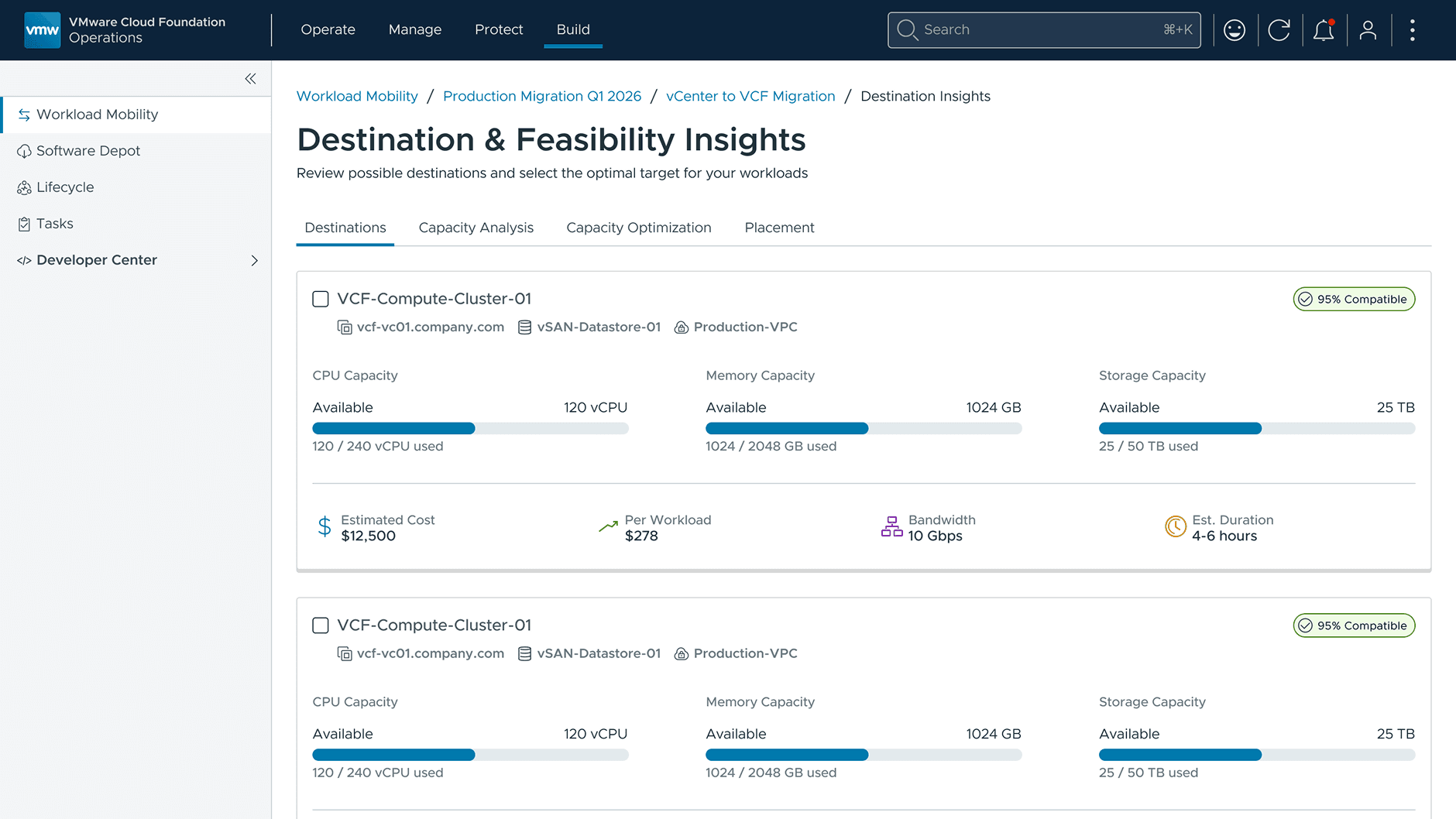
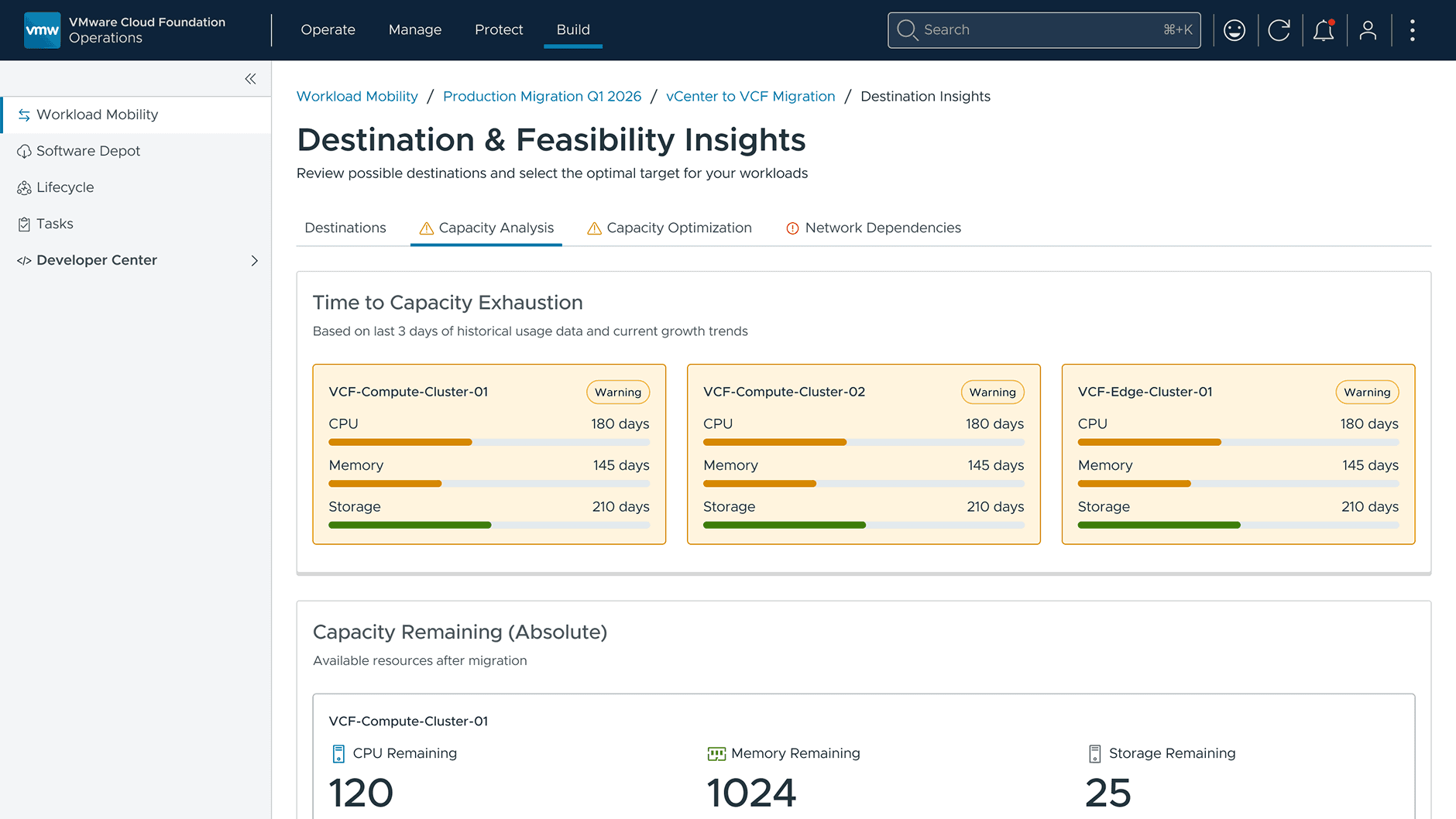
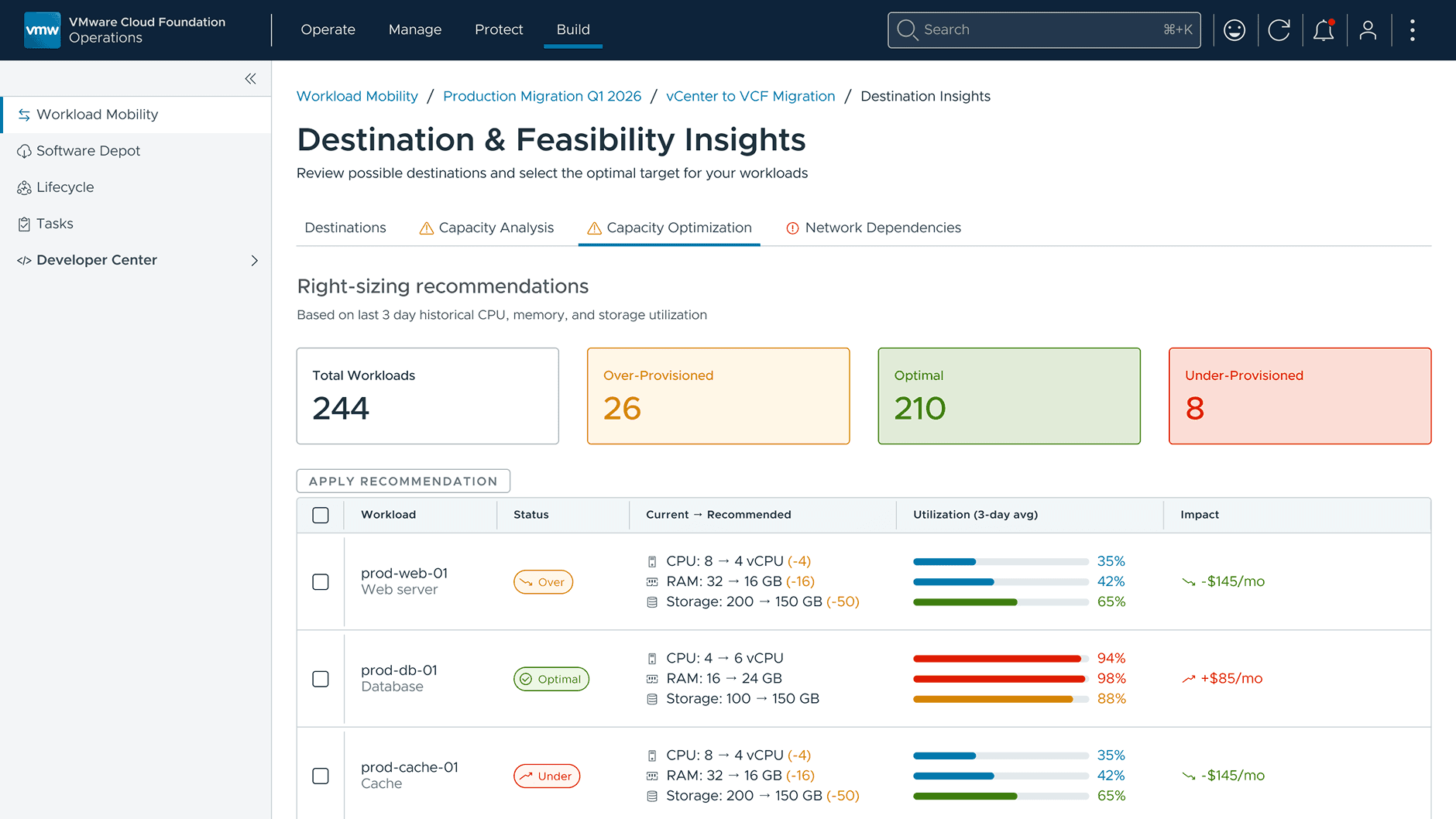
Contextualizing the Global Scope – The legacy planning tool forced users to start from a blind list view. I redesigned the landing experience into a data-rich dashboard, providing immediate, cross-plan metrics (such as completed vs. failed waves) before the user even initiates a new migration plan.
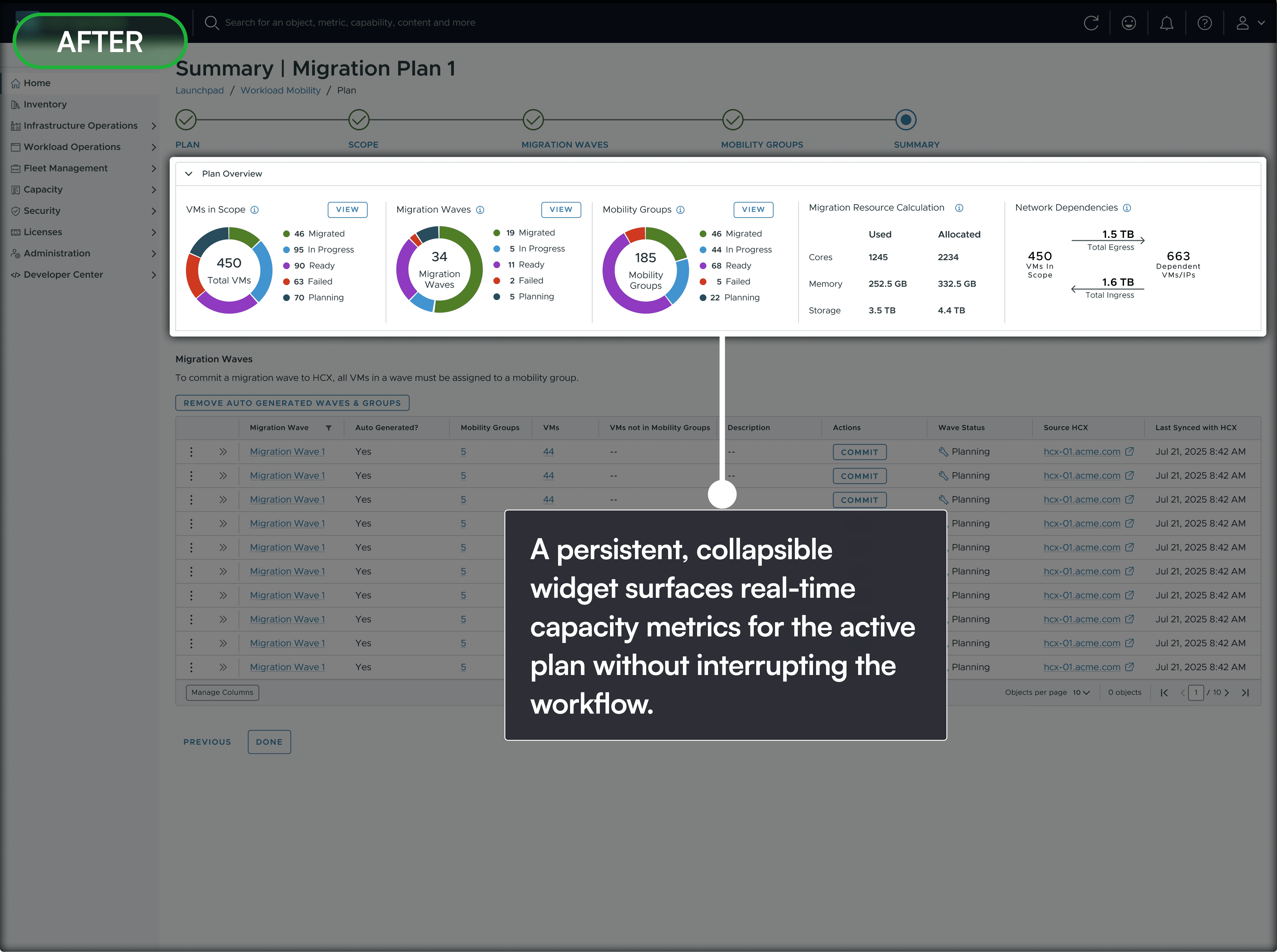
Persistent context during execution
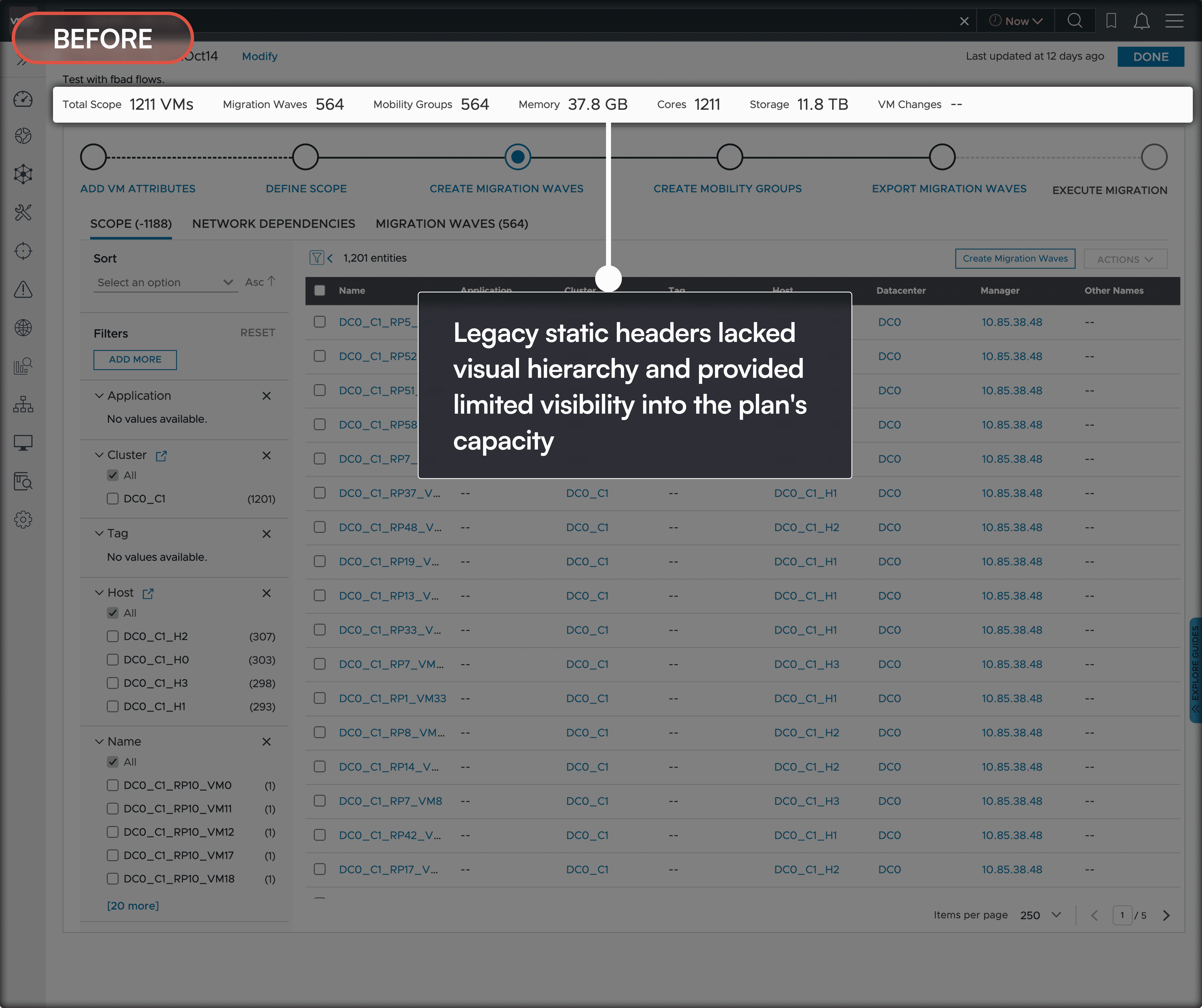
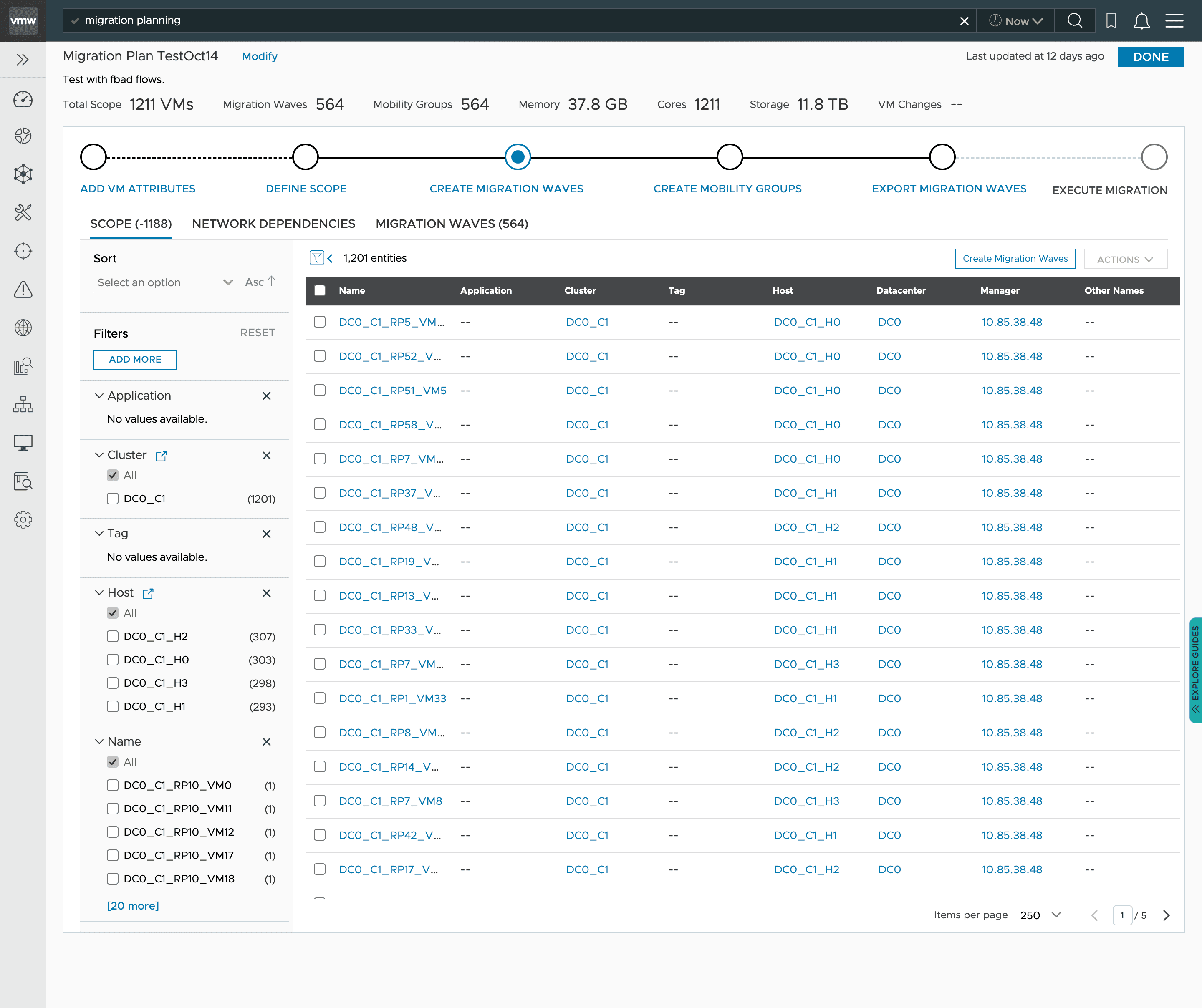
Persistent Summary Widget – During research, users reported they had limited visibility into the plan's capacity when they were deep inside the migration workflow. In direct response to this feedback, I designed a sticky, collapsible summary widget that persists across all steps of the plan creation. This ensures operators always have real-time visibility into allocated resources without losing their place.
Automating the tedious & error-prone
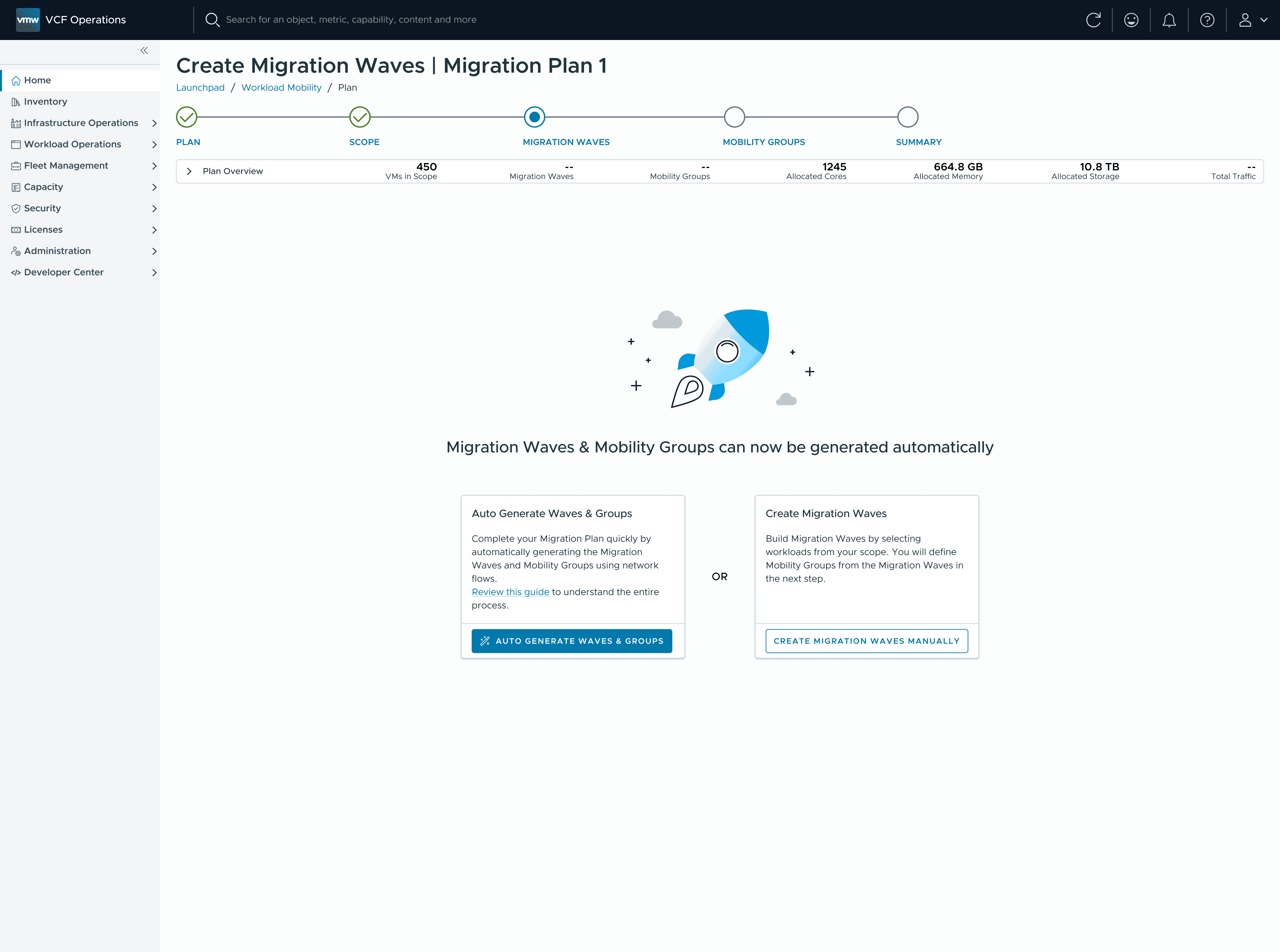
Building migration waves manually was highly tedious and error-prone. We introduced an automated workflow that analyzes network dependencies to instantly generate optimal migration waves and mobility groups, drastically reducing time-to-value while preserving the operator's ability to review and override the system's logic.
Modernizing legacy execution workflows
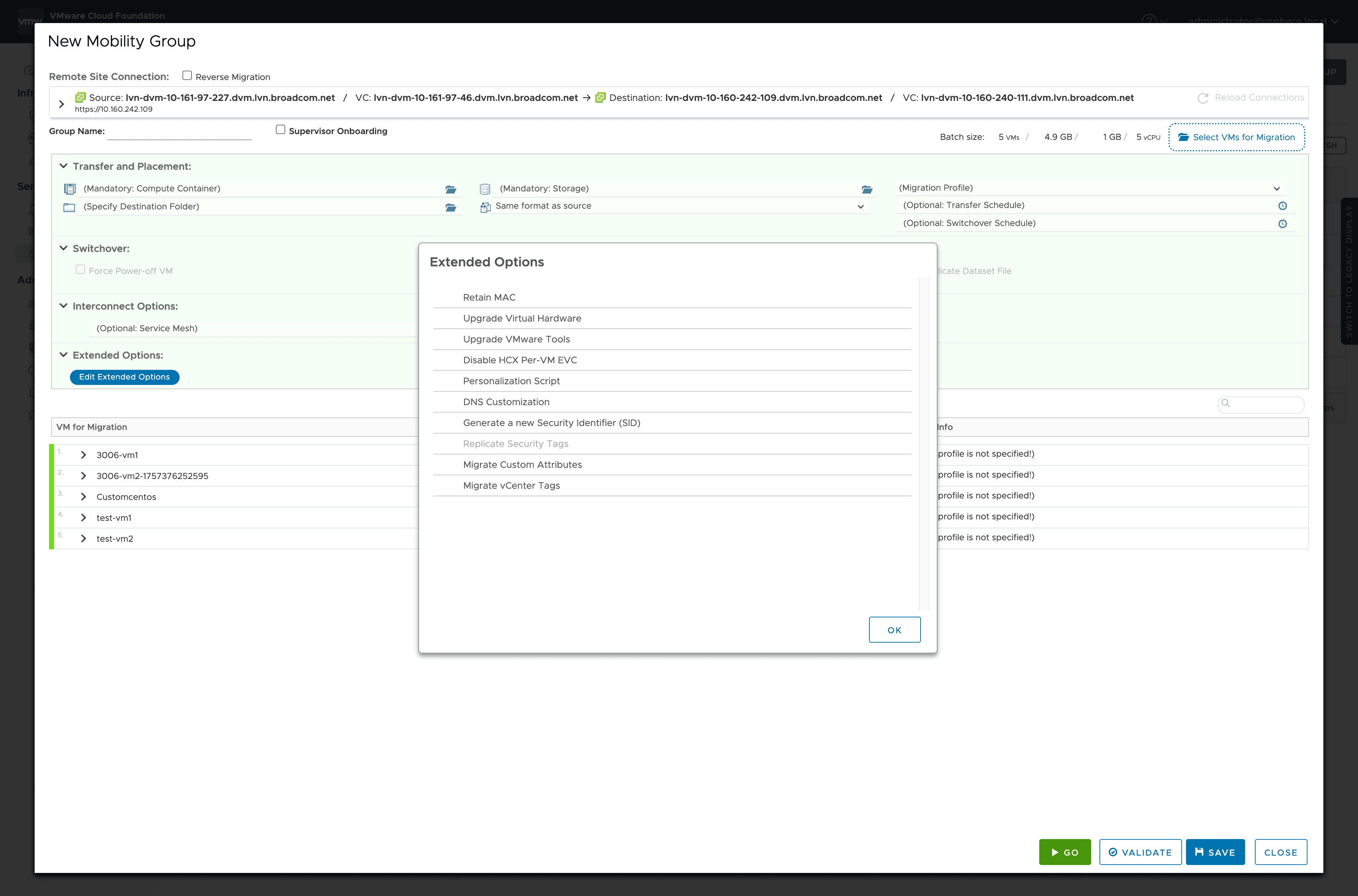
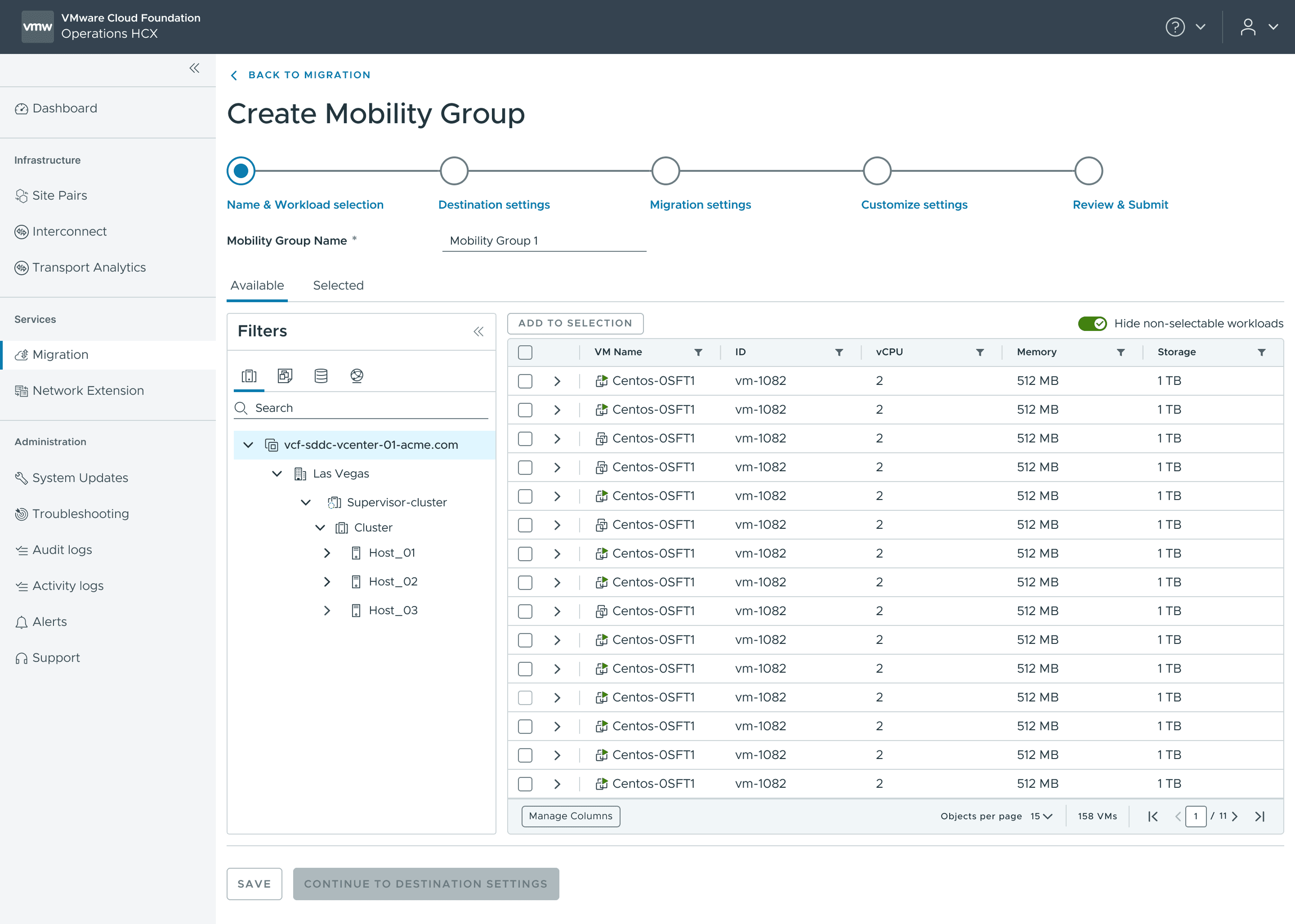
The legacy HCX execution flow buried critical settings under complex, nested interactions. When engineering decided to modernize the architecture, I redesigned the UI into a clear, linear progression, utilizing scalable inventory tables and global destination assignments. This not only removed immediate friction but structurally prepared the interface for its eventual native integration into the Ops UI.
Customer Testimonials
Scaling to a Global Service
Following the success of the Workload Mobility unification, I defined the long-term vision for a Global Mobility Service—shifting from individual tool integration to a unified "single pane of glass."
Takeaways
Designing for Ecosystems: Bridging legacy tools requires solving the overarching architecture, not just localized UI fixes.
Balancing Wins with Vision: Features like the collapsible widget provided immediate relief, while our research set the foundation for the future Global Mobility service.
Multiplying Impact: True design leadership means elevating the team. Mentoring a junior designer to independently moderate high-stakes customer sessions expanded our research velocity and built lasting team capability.